Howell NJ: Newer Developments Versus Established Streets
July 16, 2026
July 16, 2026
Trying to decide between a newer development and an established street in Howell? You are not alone. In a market where many homes are single-family, owner-occupied, and suburban in style, the real question is often not whether to buy in Howell, but which version of Howell fits your life best. This guide breaks down the tradeoffs so you can compare layout, upkeep, lot size, commute access, and day-to-day feel with more confidence. Let’s dive in.
Howell Township has an estimated 2025 population of 55,156, and the housing stock is heavily made up of single-family detached homes. About 89.0% of homes are owner-occupied, and the median year structure built is 1984. Most homes were built between 1960 and 1999, which means established streets make up a big part of what buyers see here.
Current town-level market data also shows a median sale price of $681,000, with 35 median days on market and 74 homes sold. That matters because many buyers in Howell are not choosing between totally different property types. Instead, you are often comparing one suburban single-family option against another, with differences in age, layout, lot size, and road access doing most of the heavy lifting.
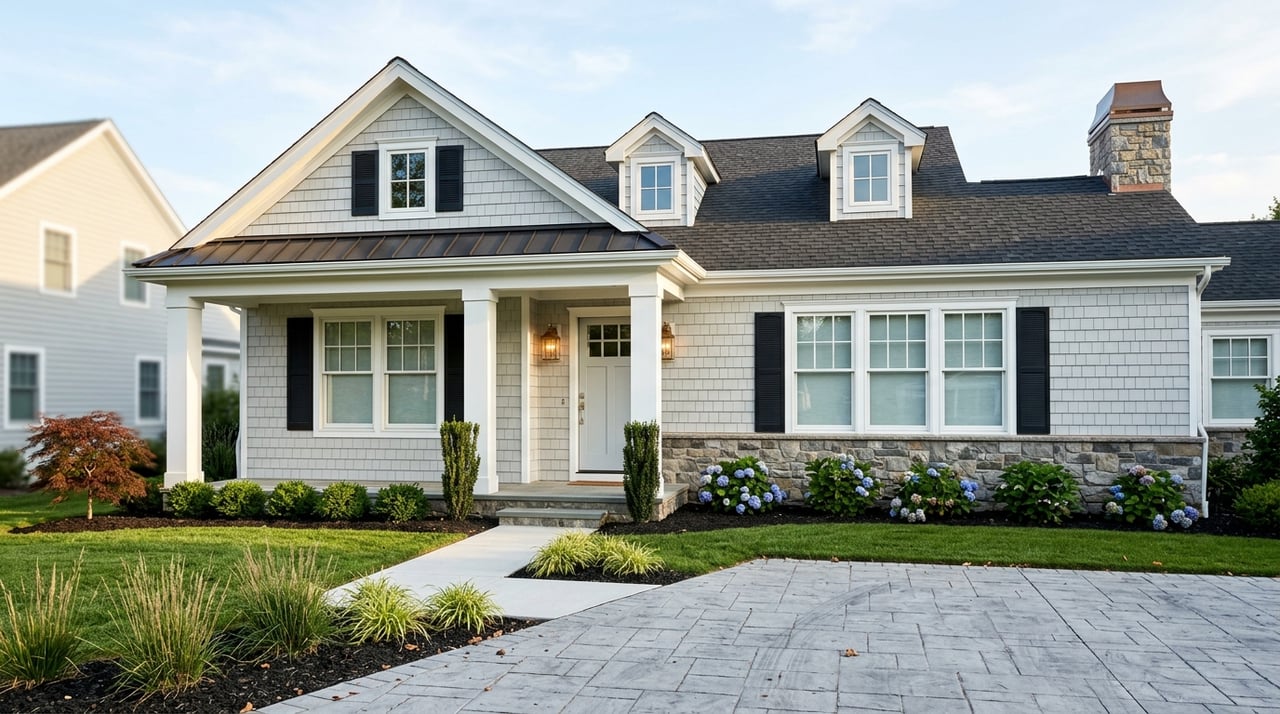
Newer construction in Howell is not all the same. Current examples range from a 2024 home at 128 W Fourth Street with 1,906 square feet on a 7,405-square-foot lot priced at $625,570, to a 2026 custom colonial at 1 Pear Court with 6,049 square feet on 1.28 acres priced at $2,224,000.
That spread tells you something important. “Newer” does not automatically mean one size, one price point, or one lifestyle. In Howell, newer homes can be standard suburban properties or large custom homes on estate-style parcels.
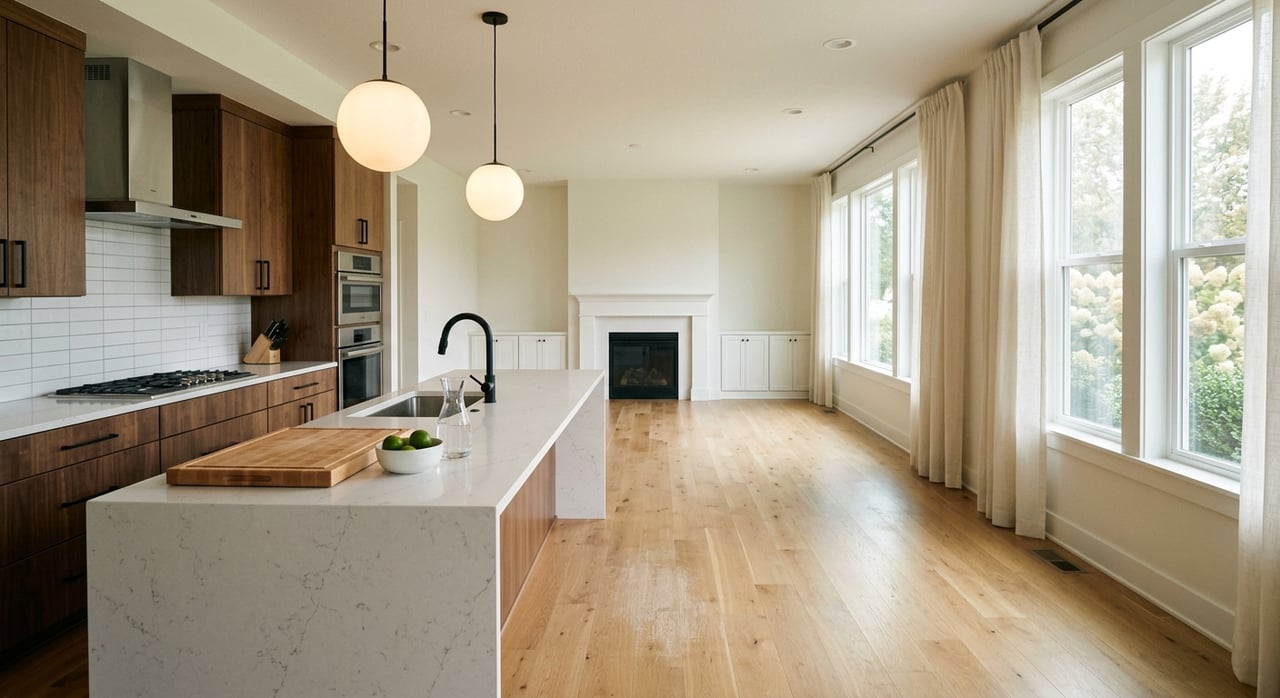
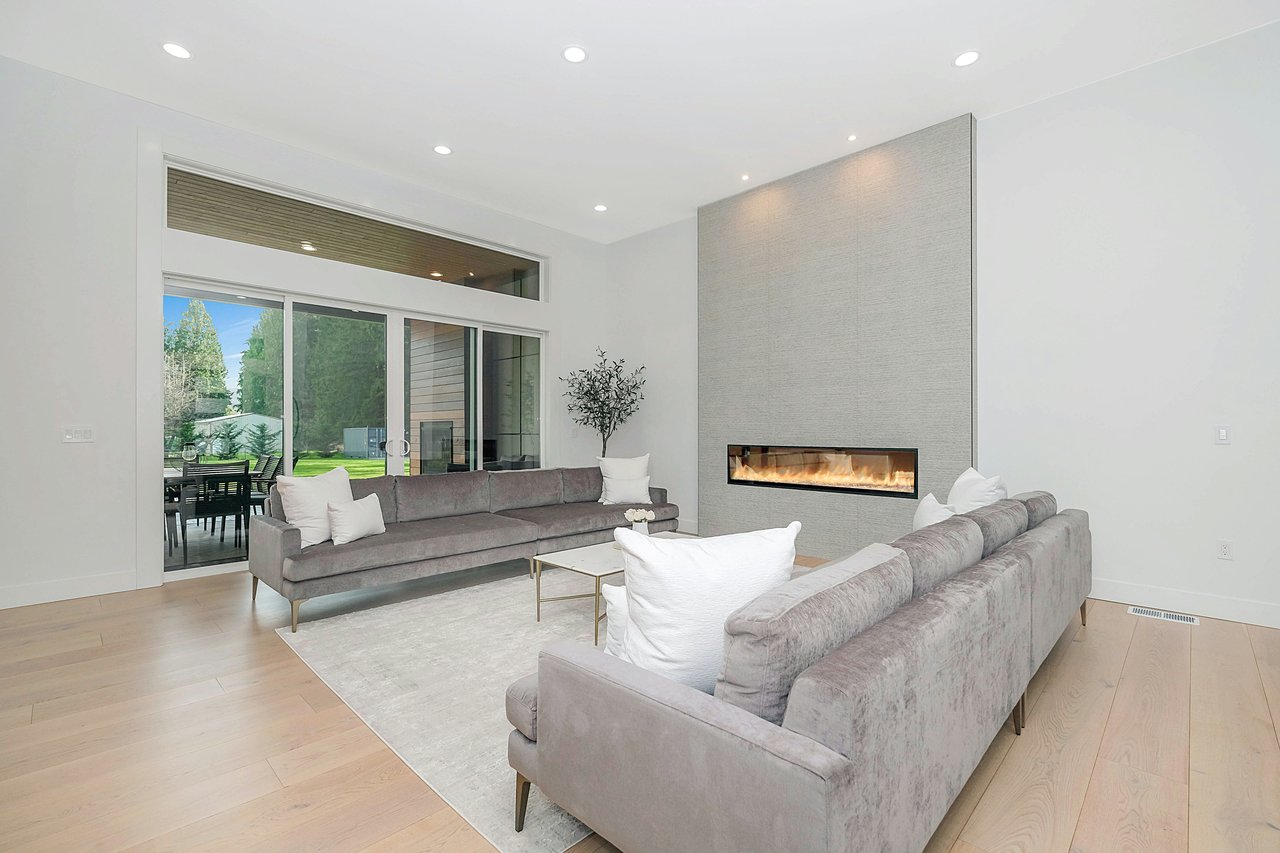
Newer listings in Howell commonly highlight open-concept floor plans, walk-in pantries, multi-zone systems, and two-car garages. If you want a more current layout and a home that feels move-in ready from day one, that can be a major plus.
In practical terms, newer build years often mean fewer immediately visible aging components. That does not remove the need for inspections, but it can reduce the chance that you are walking into an older roof, dated mechanicals, or heavily worn finishes right away.
A newer home still needs a full look at the whole package. Lot size, finish level, landscaping, and the specific street can affect both value and maintenance.
A newer home on a smaller lot may give you updated systems and a lower near-term repair burden, but it may not offer the same outdoor space or established setting as an older street. That is why the comparison needs to go beyond the year built.
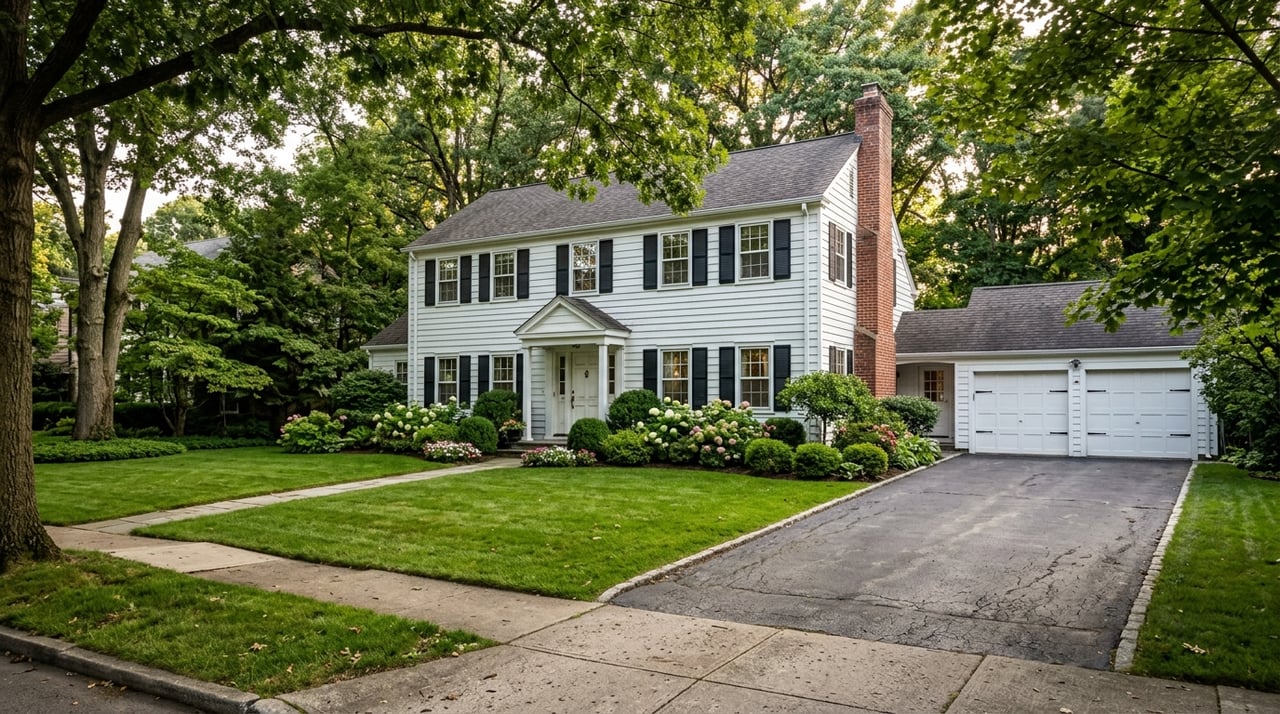
Established Howell streets bring the classic inventory many buyers expect in this part of Monmouth County. Current examples include 47 Jennifer Drive, a 1974 single-family home with 1,808 square feet on a 9,583-square-foot lot, 15 Honeysuckle Way, a 1986 ranch on 0.33 acres, and 134 Pine Needle Street, a 1984 colonial on an 8,023-square-foot lot.
These homes are in long-established sections of town such as Ramtown and Oak Glen. For buyers, that often means you are seeing mature residential patterns and a different feel from areas where homes were built more recently.
Older Howell homes often come in familiar colonial and ranch styles. If you like more defined rooms instead of fully open layouts, or you want a home in a long-established part of town, these streets may feel like a better fit.
Lot patterns also matter here. Some established homes offer outdoor space that competes well with newer options, and in Howell, that can be just as important as the interior finishes.
With homes built in the 1970s and 1980s, you should expect more attention during inspections. Roofs, HVAC systems, kitchens, bathrooms, and exterior wear deserve a closer look simply because of age.
That does not mean older homes are a bad choice. It means you should budget carefully, inspect thoroughly, and understand which updates are cosmetic versus which ones may affect your timeline and costs after closing.
One of the biggest mistakes buyers make is assuming newer always costs more. In Howell, current listings do not support that simple rule.
For example, the 1974 home at 47 Jennifer Drive is listed at $699,000, while the 2024 build at 128 W Fourth Street is priced at $625,570. At the same time, the 2026 Pear Court custom home is listed at $2,224,000.
In this market, build year is only one variable. Lot size, finish level, home size, and location all matter, and sometimes they matter just as much as age.
That is why a smarter strategy is to compare homes based on what you are actually getting:
If you focus only on “new” or “old,” you can miss the better value.
Howell’s official planning framework helps explain why two homes just minutes apart can feel so different. The township’s circulation plan emphasizes minimizing direct residential access to collector and arterial streets, preserving rural driveway character, and keeping high-traffic collector streets from intruding into established neighborhoods.
For you as a buyer, that means street-level experience matters a lot in Howell. Even when homes are close together geographically, one street may feel more tucked away while another may feel more connected to major traffic flow.
If you want quicker in-and-out access for daily driving, some locations may fit better. If you want a more interior-street feel, a different section of Howell may make more sense.
This is one reason online photos are not enough. In Howell, the road pattern and approach to the home can shape your day-to-day experience just as much as the floor plan.
Howell is still a driving-first market. The township states that there are no passenger rail stations or lines in town, though rail access is available on the coastal North Jersey Coast Line outside Howell. Bus service is limited, but the 2020 circulation plan counted 40 bus stops in town.
Regional bus service to Manhattan and northern New Jersey runs along Route 9 and Route 33, including Academy Bus and Coach USA service to the Port Authority and Wall Street. Howell also has park-and-ride lots at Aldrich Road and Route 9, and north of Strickland Road.
Neither newer developments nor established streets are automatically better for commuting. The real issue is the specific location of the home.
If commuting convenience is high on your list, you may want easier access to Route 9, Route 33, or park-and-ride options. If your top priority is a quieter setting, an interior street may feel better, even if it adds a little more driving time to your routine.
The cleanest way to compare Howell’s newer and older housing is to stop thinking in labels and start thinking in lifestyle. The best home for you depends on how you rank maintenance, space, commute, and setting.
Here are the biggest decision points to weigh.
A newer home may be a better fit if you want:
An established street may be a better fit if you want:
In Howell, the choice between newer developments and established streets is rarely a simple price question. Current listings show clear overlap, and the better value often comes down to lot size, finish level, road access, and how much work you want to take on after closing.
If you want straight talk, the best move is to compare specific homes, not broad categories. That is how you avoid overpaying for “new” or underestimating what an older home may need.
When you are ready to sort through Howell with a clear strategy, Alexis Fraistat can help you zero in on the right street, the right house, and the right game plan.

I’m Alexis Fraistat – a single mom, a hustler, and a Realtor® who gets things DONE. From negotiating the best deals to guiding you through inspections, paperwork, and everything in between, I’m in it with you.
ALEXIS FRAISTAT
[email protected]
(732) 859-7920
License #1968928
830 Broad St Ste 4 Shrewsbury NJ 07702