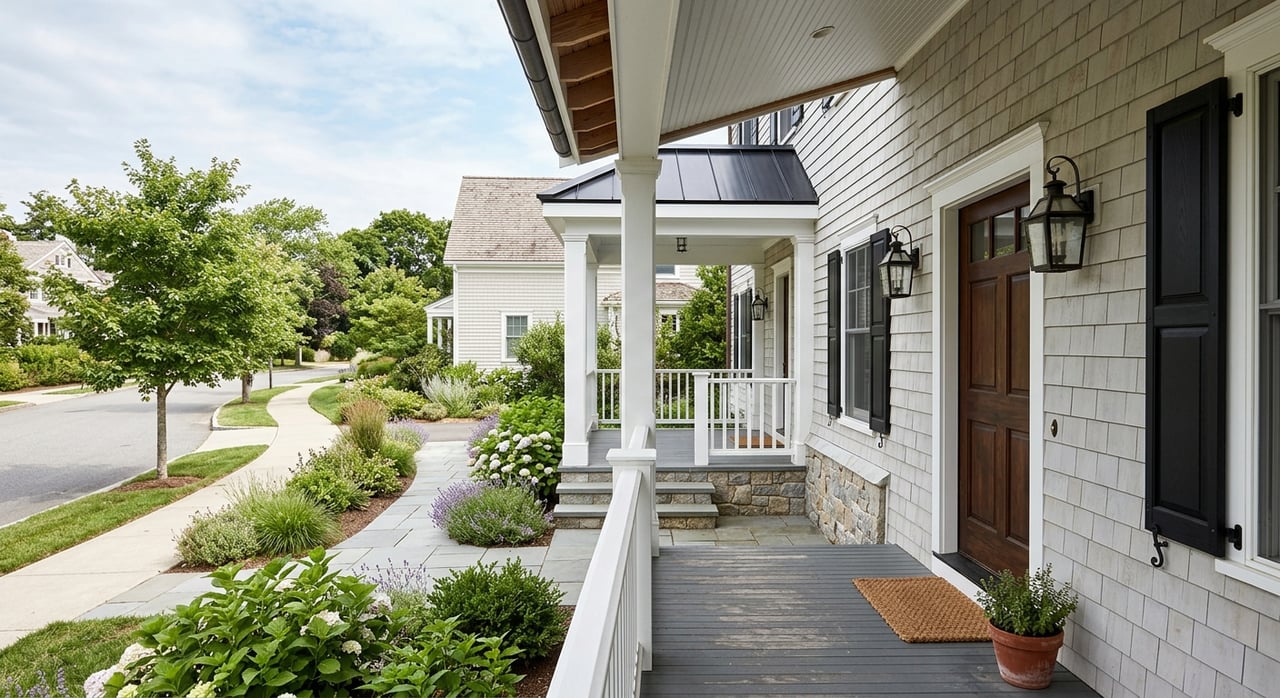
Red Bank NJ Walkable Living and Car-Light Home Tips
July 2, 2026
July 2, 2026
Wish you could cut back on driving without giving up convenience? In Red Bank, that idea is more realistic than a lot of buyers expect. If you want a home where dinner, coffee, parks, and even the train can be part of your regular routine, this guide will show you where a car-light lifestyle fits, where it gets tougher, and what tradeoffs to watch before you buy. Let’s dive in.
Living car-light in Red Bank does not usually mean living fully car-free. It means you may be able to walk for some daily needs, use NJ Transit for certain trips, and rely on a car less often instead of for every errand.
That distinction matters because Red Bank is compact, but it is not uniformly easy to navigate on foot. The borough is about 1.75 square miles, and much of downtown has a walkable sidewalk network. At the same time, borough planning documents note long crossing distances in some areas, gaps in sidewalks, and very limited bike lanes.
In plain terms, the car-light lifestyle works best in and around the downtown core. As you move farther from that center, daily life can become more auto-oriented.
Downtown is the strongest match if you want to drive less. Borough planning describes Broad Street as the central business district, with a mixed-use pattern that includes commercial space and multifamily housing.
That setup supports a more convenient routine because more destinations are close together. Red Bank is also known for boutique retail, theaters, and restaurants, and the borough has added Broadwalk pedestrian-plaza space on Broad Street, which officially opened on May 11, 2026.
If your goal is to step outside and have more of your day within reach, downtown gives you the clearest shot at that. It is the part of town where walkability feels most built into everyday life.
One of Red Bank’s biggest advantages is its NJ Transit station on the North Jersey Coast Line. For buyers who want more flexibility in how they get around, train access can be a major piece of the puzzle.
The station area is especially important because NJ Transit is advancing a six-acre transit-oriented development there. The station-area redevelopment plan allows multifamily dwellings, mixed-use development, retail, public transit facilities, and parking garages.
That does not guarantee a car-free routine, but it does support a lifestyle where your car may become a backup instead of your default. If your schedule includes train travel or you simply like having another transportation option, the station area deserves a close look.
It is easy to assume a walkable downtown means most residents do not drive much. The actual picture is more balanced.
According to the borough’s housing plan using 2023 ACS data, 64.3% of workers drove alone, 6.7% carpooled, 4.8% used public transportation, 5.2% walked, 5.5% used other means, and 13.5% worked from home. That tells you Red Bank can support a car-light routine, but it is not a place where most people are skipping cars altogether.
For many buyers, the sweet spot is a hybrid setup. You may walk to some destinations, use the train for some trips, and still keep access to a car for the rest.
If you are house hunting with this lifestyle in mind, location inside Red Bank matters a lot. The strongest car-light pockets are generally:
These areas line up best with the borough’s mixed-use patterns, train access, and public open space. If reducing your driving is high on your list, that should shape where you start your search.
Red Bank offers a mixed housing stock, which gives buyers options. The borough’s housing plan lists 6,184 housing units, including 42.3% single-family detached homes, 8.7% single-unit attached homes, 6.1% two-unit buildings, 8.5% three-to-four-unit buildings, 5.3% five-to-nine-unit buildings, 6.4% 10-to-19-unit buildings, and 22.7% buildings with 20 or more units.
For car-light buyers, that mix matters. Closer to downtown and the station, you are more likely to find attached or multifamily options than large-lot detached homes.
The housing inventory is primarily made up of one-bedroom, two-bedroom, and three-bedroom homes. That can be a good fit if you care more about location and convenience than extra land or oversized private parking.
A car-light lifestyle usually comes with some give-and-take. In Red Bank, one of the biggest tradeoffs is space.
The borough describes Red Bank as an established community with many historic homes as well as newer structures. Older housing stock can offer charm and location, but it may also mean smaller yards, more shared or municipal parking, and less garage or driveway convenience than newer suburban subdivisions.
If you want every errand to be easy on foot and you need a large yard and private parking, you may feel that tension quickly. Red Bank can deliver convenience, but not always the suburban setup that some buyers are used to.
If you are planning to drive less, parking still matters. In downtown Red Bank, parking is actively managed rather than unlimited.
The borough offers on-street parking and surface lots. Meters are enforced Monday through Saturday from 9 a.m. to 9 p.m., parking is free after 9 p.m. on weekdays, and parking is free all day Sunday.
Residents may apply for residential parking permits with a driver license and registration. Public lot permits are also available monthly, quarterly, for six months, or annually, and the monthly public-lot permit is listed at $180.
Some spaces in the Gold Street, Union Street, White Street, and Eastside lots are permit-only on weekday mornings before becoming metered later in the day. When you compare homes, check whether a property includes off-street parking or depends on borough permits and nearby lots.
Red Bank also describes itself as bike-friendly. The borough provides a bicycle parking map and a bike repair station, which can make short trips more practical if you prefer not to drive.
That said, the borough’s planning documents also note very limited bike lanes. So biking may be useful for some routines, but it is not the same as having a full bike-network system.
Walking remains the stronger day-to-day feature, especially in the downtown core. If your goal is to combine walking, biking, and transit in a flexible way, Red Bank gives you some helpful tools, just not a perfect system.
One overlooked benefit of living near downtown is access to public open space. If you are considering a smaller lot or less private outdoor space, nearby parks can make a big difference in how livable the area feels.
Red Bank’s public spaces include Riverside Gardens Park on the Navesink River on West Front Street, Marine Park off East Front Street by Riverview Medical Center, East Side Park with sports courts and playground access, and Count Basie Park with a walking track.
For buyers who want to be able to get outside without planning a drive, these spaces add real value. They can help offset the smaller-yard tradeoff that often comes with more walkable locations.
Walkability and transit access are not just lifestyle perks. They can also influence buyer demand.
In Fannie Mae’s Q3 2024 consumer survey, 47% of respondents said they would pay more for walkability to shops, restaurants, and other amenities, and 31% said they would pay more for close proximity to public transportation. NAR’s 2023 survey found that 79% of respondents rated walkability as very or somewhat important and 78% said they would pay more for a home in a walkable community.
Broader market research points in a similar direction, though the size of any premium varies by metro, property type, and timing. For Red Bank specifically, the safest takeaway is that homes near downtown, the station, and public open space may appeal strongly to buyers who want a car-light lifestyle, especially when parking, condition, layout, and lot size also work in their favor.
Red Bank tends to be a strong fit if you want a more flexible lifestyle without going fully car-free. It can work especially well if you like the idea of walking to dining, coffee, parks, and the train while still keeping a car for certain needs.
It may be less ideal if you want a large yard, a private garage or driveway, and every single errand within a short walk. The closer you get to downtown convenience, the more likely you are to trade space and easy parking for location.
The key is being honest about how you really live. If you want to drive less, not eliminate driving completely, Red Bank can be a very practical option.
If you want help matching your budget and day-to-day routine to the right part of Red Bank, talk to Alexis Fraistat. You’ll get straight answers, local insight, and a smart game plan for finding a home that fits how you actually want to live.


I’m Alexis Fraistat – a single mom, a hustler, and a Realtor® who gets things DONE. From negotiating the best deals to guiding you through inspections, paperwork, and everything in between, I’m in it with you.
ALEXIS FRAISTAT
[email protected]
(732) 859-7920
License #1968928
830 Broad St Ste 4 Shrewsbury NJ 07702