The Bulkhead Question Every Toms River Waterfront Seller Has to Answer Twice
October 1, 2026
October 1, 2026
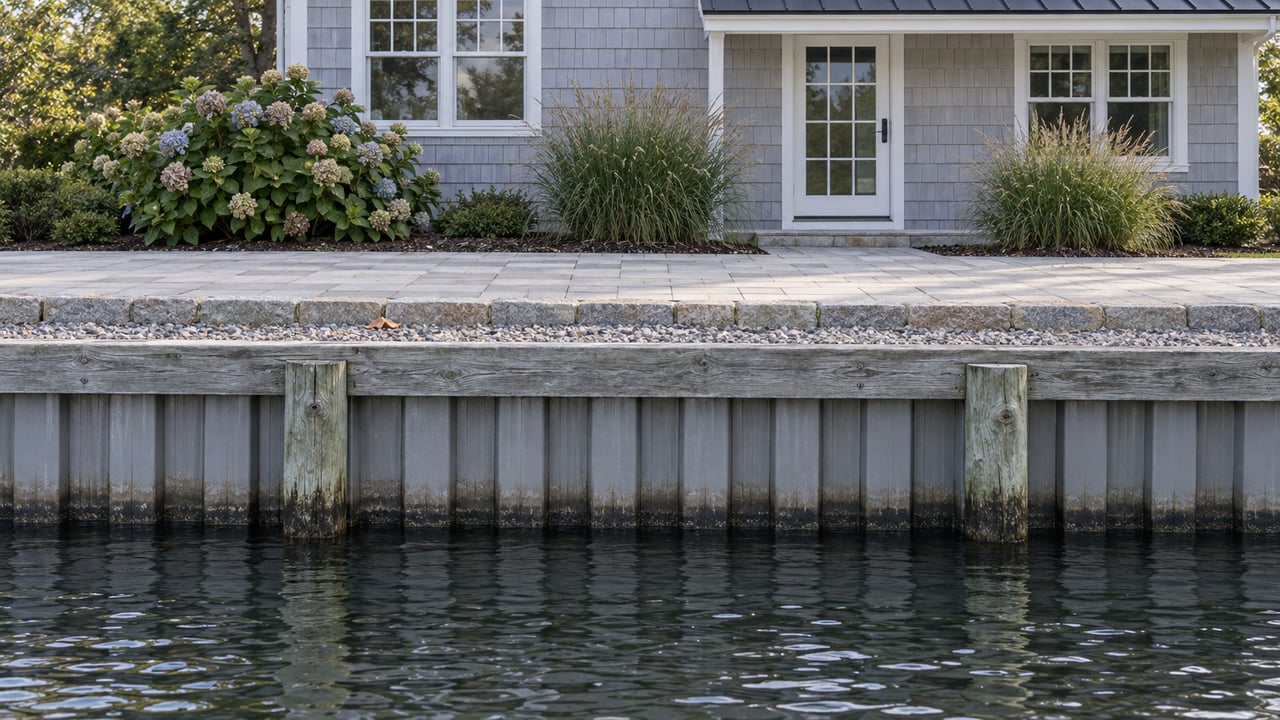
A lagoon-front sale in Toms River rarely falls apart over the kitchen or the roof. It falls apart, or stalls for months, over four feet of vertical wall between the yard and the water. And here's what most sellers in Silver Bay, Shelter Cove, Green Island, Windsor Park, Snug Harbor, Money Island, Dover Shores, and Ortley Beach don't realize until an attorney flags it: the bulkhead raises two completely separate questions, and only one of them is about whether it's falling apart.
The first question is physical. Is the wall sound, or does it need to be replaced before or after the sale? That one shows up in the listing description and gets negotiated like any other repair item. The second question is legal, and it's the one that actually stops closings: does the state of New Jersey still claim an interest in the ground the bulkhead sits on, even though the lagoon was privately dug decades ago? That question can take a year to answer, and most people never learn to ask it until they're already under contract.
Look at active waterfront listings around Toms River right now and the pattern is obvious. A home with a documented new vinyl bulkhead gets that fact written into the first paragraph, right alongside the pool and the dock. A home where the bulkhead needs work gets that flagged too, usually as a straightforward disclosure: bulkhead in need of repair or replacement. Buyers in these lagoon communities have learned to read that line the way they'd read a roof age.
That makes sense once you look at what a bulkhead actually costs to redo. Industry material-and-labor guides for 2026 put bulkhead and seawall construction at roughly $150 to $650 per linear foot depending on material, with timber running cheaper and concrete or steel running higher. On a typical 50 to 100 foot lagoon lot, common in sections like Windsor Park and Green Island, that's a project running anywhere from about $8,000 to $65,000 before permits, demolition of the old wall, or any tieback and dock work layered on top. Ocean County boat owners comparing notes over the years have reported vinyl quotes anywhere from roughly $125 to $450 a foot, with the spread driven mostly by water depth, whether a barge has to be brought in, and how far out local marine contractors are booked.
That's a wide enough range that sellers have a real decision to make: replace the wall before listing and market it as a feature, or leave it and negotiate a credit at closing. Either path is workable. What isn't workable is discovering the condition for the first time during a buyer's inspection, with a closing date already on the calendar.
Bulkhead work in Toms River isn't a handshake project between a homeowner and a contractor. The township has its own bulkhead and boat facility ordinance, adopted by the Township Council under Ordinance 4168-08, and it requires a building permit before any bulkheading, dredging, or lagoon-adjacent construction goes forward. Under that code, the Department of Public Works and the Township Engineer are supposed to inspect the outfall pipe and bulkhead penetration once work is done, unless the property owner instead submits certification of proper installation from a licensed engineer. The fee schedule is old and modest on paper, ten dollars for each additional 50 feet of bulkheading beyond the base, but the paperwork requirement itself is what trips people up. A contractor who's replaced a hundred bulkheads on Barnegat Bay still has to file for the local permit before driving the first piling.
None of this is unique to Toms River. Shore townships up and down the bay have built out similarly specific local bulkhead codes over the past two decades, mostly in response to storm damage and aging timber walls from the 1970s and 80s reaching the end of their service life at roughly the same time. What is worth knowing is that the municipal permit and the state-level paperwork are two different things, and clearing the first one doesn't clear the second.
This is the piece that catches people who've owned a lagoon-front home for years without ever giving it a thought. New Jersey law holds that the state owns, in fee simple, any land that is now or was ever formerly flowed by the mean high tide of a natural waterway. According to the New Jersey Department of Environmental Protection, that claim doesn't disappear just because the tidal area was later dug out, filled in, or turned into a private lagoon by a developer decades ago. Tidelands claims exist across most of New Jersey's shore counties, and Ocean County sits squarely inside that footprint. A Tidelands Claim is described by the DEP as a cloud on a property's title regardless of whether the current owner even knows it exists.
For a lagoon community, this shows up specifically around the bulkhead, because the wall marks the boundary between private upland and what may still be, on paper, state-owned tidal ground. Attorneys who handle these matters for shore clients describe the process of clearing a claim as part title research, part regulatory filing: a search of ownership and permit history back to September 26, 1980, confirmation of whether the existing bulkhead was ever issued a state Waterfront Development Permit, and then an application to the DEP's Bureau of Tidelands Management for either a riparian grant or a tidelands license, depending on whether the affected ground is still tidal or was long ago filled. The DEP's own guidance puts the riparian grant timeline at approximately one year, and a tidelands license, which functions more like a short-term rental agreement with the state for a dock or bulkhead footprint, typically takes six to twelve months to process.
None of that fits inside a normal 45 to 60 day attorney review window. When a tidelands issue surfaces late in a transaction, it usually means one of three things: the closing gets pushed, the buyer accepts the property with the claim still unresolved, or the deal falls through while everyone waits on the state.
If you own a lagoon-front home in Toms River and you're thinking about a spring listing, the math on timing runs backward from what most sellers expect. The bulkhead condition assessment and contractor quote can happen in a matter of weeks. The tidelands question cannot. Before you list, it's worth pulling together:
None of this means every lagoon sale in Toms River runs into a tidelands problem. Plenty close without one ever surfacing. But the properties that hit a wall, sometimes literally, are almost always the ones where nobody checked until it was too late to check quietly.
Does every Toms River lagoon home have a tidelands claim? No. Claims exist across most of New Jersey's shore counties, including Ocean County, but whether a specific parcel carries one depends on that property's individual history. The only way to know for certain is a tidelands search tied to your tax lot and block.
Do I have to fix the bulkhead before I can sell? There's no requirement to replace a bulkhead before listing. What matters is documenting its condition honestly, since buyers and their inspectors will assess it either way, and deciding whether replacement-before-listing or a closing credit gets you a better net outcome.
How long does a riparian grant actually take? The DEP's own guidance puts a grant at approximately one year from application to delivery, with tidelands licenses running six to twelve months. If a claim needs to be resolved before closing, that timeline has to be built into the contract from the start, not discovered partway through.
If you're weighing a listing on Barnegat Bay this fall or trying to figure out what a lagoon-front purchase actually requires before you write an offer, Alexis Fraistat can walk you through what your specific parcel's history looks like before it becomes a problem at the closing table.


I’m Alexis Fraistat – a single mom, a hustler, and a Realtor® who gets things DONE. From negotiating the best deals to guiding you through inspections, paperwork, and everything in between, I’m in it with you.
ALEXIS FRAISTAT
[email protected]
(732) 859-7920
License #1968928
830 Broad St Ste 4 Shrewsbury NJ 07702